Triathlon Training Zones 1–5 Explained: Why They Matter
Summary:
Triathlon training zones provide a structured way to manage effort across swimming, cycling and running. This guide explains how Zones 1–5 work, the metrics used to measure them, the purpose of each zone and how they work together to structure effective triathlon training.
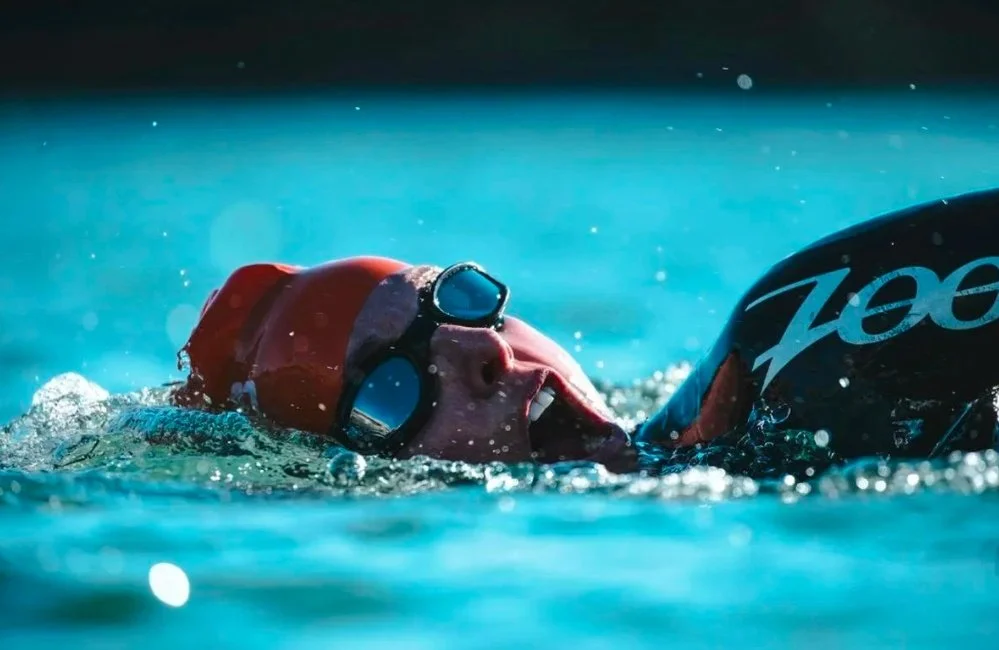
Why Training Zones Matter in Triathlon
Triathlon places a unique demand on the body because effort must be managed across swimming, cycling and running without overloading any single discipline. Training zones bring structure to that challenge. They allow athletes to apply the right stress at the right time rather than relying on guesswork and they support consistent training without drifting into unnecessary fatigue.
When zones are ignored, training often slips into a middle ground where easy sessions become slightly too hard and demanding sessions lose clarity. Progress slows not because effort is missing, but because purpose is blurred. Training zones restore contrast by separating recovery from endurance work and controlled intensity from true high effort sessions. This separation allows adaptation to occur rather than being diluted over time.
Most importantly, training zones give every session a clear purpose. They define what the session is trying to achieve before it begins, which shapes expectations and preparation. Knowing whether the goal is recovery, steady endurance or higher intensity work allows athletes to prepare physically through pacing and fuelling and mentally through focus and restraint. Instead of reacting to effort as it unfolds, athletes can enter a session with intent, execute it with confidence and finish knowing whether the objective was met.
How Triathlon Training Zones Work
Training zones are used to define session intensity in a way that reflects current fitness and the specific demands of triathlon, where effort must be managed across three disciplines rather than isolated in one. They provide a shared framework that brings consistency to training decisions, helping athletes move away from guesswork and emotional pacing toward controlled execution. By anchoring sessions to zones, training becomes easier to plan, easier to repeat and easier to recover from as overall training load increases across the season.
How zones are defined in triathlon
Heart rate:
Heart rate measures how frequently the heart beats per minute and reflects the body’s internal response to effort. In training it is used to estimate how hard the cardiovascular system is working relative to an athlete’s maximum or threshold heart rate.Lactate Threshold Heart Rate LTHR (Sport Specific):
Represents the heart rate at the intensity where blood lactate begins to rise rapidly with increasing exercise intensity. It reflects the upper boundary of sustainable effort and is used to personalise endurance training zones.Threshold Pace:
Represents the running speed at the intensity where blood lactate begins to rise rapidly with increasing exercise intensity. It reflects the upper boundary of sustainable effort and is used to personalise pace-based endurance training zones.Cycling power (FTP):
FTP stands for Functional Threshold Power and represents the highest average power an athlete can sustain at threshold intensity for approximately one hour. It is used as a reference point for setting cycling zones and expressing intensity relative to sustainable effort.Swim pace (CSS):
CSS stands for Critical Swim Speed and represents an athlete’s threshold swim pace or the fastest pace that can be sustained for a prolonged, steady effort. It provides a practical benchmark for defining swim training zones in triathlon.Perceived effort (RPE):
RPE stands for Rate of Perceived Exertion and describes how hard a session feels to the athlete on a subjective scale. It acts as a universal reference that helps translate internal sensations of effort into usable training intensity.
Each training zone serves a specific purpose within long term development, from supporting recovery and building sustainable endurance to applying controlled pressure and higher intensity when required. The value of zones lies in using the right effort at the right time rather than chasing intensity for its own sake. When sessions are aligned with their intended purpose, training becomes easier to manage, easier to recover from and more consistent across the season and into race preparation.
Triathlon Training Zones 1 to 5 Explained
Zone 1: Active Recovery
Zone 1 sits at the lowest end of the intensity spectrum and is used to support recovery while keeping the body moving. In triathlon it provides a way to maintain consistency across swimming, cycling and running without adding meaningful stress, allowing athletes to absorb harder sessions and stay fresh across the training week.
Zone 1 intensity guidelines
Heart Rate: 68–73% of Max HR, 72–81% LTHR
Bike Power: <55% of FTP
Swim Pace: 77–87% of CSS
Threshold Pace: <78% TPace
RPE: 1–2
Effort: Very easy
Purpose: Active recovery, circulation and easy movement
Zone 1 training is intentionally very easy across all three disciplines, with effort kept low enough that breathing remains relaxed and movement feels controlled throughout. Its value lies not in driving adaptation, but in supporting it, allowing fatigue to dissipate while maintaining rhythm and technical consistency. Easy swimming reinforces feel for the water without strain, light cycling encourages blood flow through tired muscles and short recovery runs preserve movement patterns while limiting impact. When used consistently, Zone 1 helps stabilise training load, improves recovery between harder sessions and supports long-term progress by ensuring athletes arrive at key workouts and race day with energy directed where it matters most.
Zone 2: Endurance
Zone 2 forms the foundation of triathlon training and is where most sustainable progress is built. It sits at an intensity that can be maintained for long periods with stable effort and consistent pacing, making it central to developing durability across swimming, cycling and running. In triathlon, Zone 2 is where athletes learn to manage output, stay composed under steady load and build the capacity to handle longer sessions without effort drifting or breaking down.
Zone 2 intensity guidelines
Heart Rate: 73–80% of Max HR, 81–90% LTHR
Bike Power: 56–75% of FTP
Swim Pace: 87–94% of CSS
Threshold Pace: 78–88% TPace
RPE: 3–4
Effort: Easy
Purpose: Aerobic endurance, efficiency and fatigue resistance
Zone 2 training feels steady and controlled rather than easy or demanding. Breathing is deeper but remains rhythmic, effort is sustainable and pacing stays even across the session. Zone 2 builds aerobic endurance and improves movement economy by reinforcing efficient movement under low to moderate load. Across all three disciplines, Zone 2 training teaches the body to rely more on fat as a fuel source during lower-intensity efforts over long durations, improves oxygen delivery and builds resilience without draining recovery, allowing athletes to accumulate meaningful training volume week after week.
Zone 3: Tempo
Zone 3 sits between steady endurance and threshold work and is used to apply sustained pressure without tipping into maximal effort. In triathlon it plays a key role in developing the ability to hold a strong pace while fatigue is present, bridging the gap between long aerobic sessions and harder intensity work. Zone 3 is where control, discipline and pacing skill become just as important as fitness.
Zone 3 intensity guidelines
Heart Rate: 80–87% of Max HR, 90–95% LTHR
Bike Power: 76–90% of FTP
Swim Pace: 95–98% of CSS
Threshold Pace: 88–95% TPace
RPE: 5–6
Effort: Moderately hard
Purpose: Sustainable speed, pacing control and fatigue tolerance
Zone 3 training feels purposeful and demanding while remaining controlled. Breathing is noticeably heavier, conversation is limited and focus is required to maintain effort without drifting too hard. This zone can be understood as a more intense extension of Zone 2 where lactate production increases and can still be cleared effectively, allowing athletes to sustain pressure rather than spike effort. Running in Zone 3 builds aerobic strength and reinforces efficient mechanics at faster paces, cycling develops the ability to hold steady power under load and swimming improves rhythm and strength at race relevant intensities. When used appropriately, Zone 3 improves pacing judgement, builds confidence under fatigue and prepares athletes for sustained race efforts without the recovery cost of repeated threshold work.
Zone 4: Threshold
Zone 4 sits at the upper edge of sustainable intensity and represents the highest effort that can be held steadily without tipping into short, maximal work. In triathlon it is used to raise lactate threshold and improve the body’s ability to clear lactate while maintaining control of pace and power. By shifting this threshold upward, Zone 4 training allows athletes to sustain stronger efforts, improve pacing judgement and increase the effectiveness of endurance and tempo work beneath it. Because of its demanding nature, Zone 4 requires focus, discipline and careful placement within the training week to be effective.
Zone 4 intensity guidelines
Heart Rate: 87–93% of Max HR, 95–102% LTHR
Bike Power: 91–105% of FTP
Swim Pace: 99–104% of CSS
Threshold Pace: 95–103% TPace
RPE: 7–8
Effort: Hard
Purpose: Lactate threshold development, sustained pace and power control
Zone 4 training feels hard but controlled, with effort sitting close to the point where form or pacing would begin to break down if intensity increased further. Breathing is heavy, conversation becomes limited and difficult and concentration is required to hold output consistently. During this phase, lactate accumulation continues to rise to around an athlete’s lactate threshold, placing demand on the body’s ability to tolerate and clear it while maintaining efficiency. Running in Zone 4 improves the ability to sustain strong race pace under fatigue, cycling develops the ability to sustain power output at threshold and swimming strengthens the capacity to hold demanding pace with controlled technique. When applied correctly, Zone 4 raises sustainable performance, sharpens pacing awareness and prepares athletes for the most demanding sustained efforts they will face in racing.
Zone 5: VO2 Max
Zone 5 is short, sharp and intense. This is the VO2 max training zone, where oxygen demand is at its highest and the aerobic system is pushed to its limit. At this intensity, lactate accumulates faster than it can be cleared, placing Zone 5 at the upper end of an athlete’s aerobic capacity. Because this load cannot be sustained for long, Zone 5 work is always performed in brief, controlled bouts.
Zone 5 intensity guidelines
Heart Rate: 93–100% of Max HR, 102–106% LTHR
Bike Power: 106–120% of FTP
Swim Pace: >105% of CSS
Threshold Pace: 103–111% TPace
RPE: 9–10
Effort: Very hard
Purpose: VO2 max development, aerobic ceiling and high intensity tolerance
Use the FLJUGA Training Zone Calculator to calculate your ranges.
Zone 5 training feels extremely hard and demanding, with effort pushing the aerobic ceiling. Breathing becomes very fast and laboured, coordination requires conscious control and athletes are unable to talk. Fatigue accumulates fast, which is why recovery between efforts is essential. At this intensity, the aerobic system is working at maximal capacity, placing extreme demand on oxygen delivery and utilisation. Running in Zone 5 improves speed and the ability to respond to surges, cycling develops power output above threshold and swimming strengthens the capacity to sustain fast pace under aerobic stress. When used sparingly and placed carefully within the training week, Zone 5 raises the aerobic ceiling, improves efficiency at lower intensities and reinforces neuromuscular coordination under high aerobic demand, enhancing performance across all triathlon distances.
How the Zones Work Together
Each training zone plays a distinct role, but real progress comes from how they are combined rather than how hard any single session feels. In triathlon, zones work together to balance stress and adaptation across swimming, cycling and running, ensuring fitness builds without one discipline undermining another. Problems arise when these roles blur, particularly when steady endurance work drifts too hard. This is where many athletes accumulate fatigue without gaining the benefits of either easy or high intensity training.
Used correctly, zones give structure to the entire training week and season. Easy work stays easy enough to support recovery. Hard work is focused and deliberate. Over time, this contrast allows fitness to compound rather than stall. Understanding the difference between lower intensity endurance work and higher intensity efforts is especially important, as spending too much time in any one zone often leads to plateau, rising fatigue and inconsistent performance.
Used together, the zones serve clear purposes
Zone 1: Movement, recovery and restoration
Zone 2: Endurance development and aerobic efficiency
Zone 3: Sustained pressure and fatigue resistance
Zone 4: Lactate threshold and sustained performance
Zone 5: Aerobic ceiling and high intensity tolerance
Mastering how the zones work together turns training from accumulated effort into structured progression. Each session has intent, each week has balance and each phase of the season moves purposefully toward race readiness rather than chasing fitness in isolation.
Common Mistakes When Using Zones 1–5
Training zones give triathletes a clear framework for managing effort across swimming, cycling and running. They help control intensity, target specific adaptations and prevent training from drifting into guesswork. However, many athletes fail to get the full benefit of zone-based training because the zones are applied inconsistently, underused or overused across disciplines.
These are the most common mistakes triathletes make:
Turning Zone 2 into hard work:
Allowing endurance sessions to drift too hard reduces recovery and limits base development across all three disciplines.Neglecting Zone 3 altogether:
Avoiding sustained pressure work weakens pacing control and reduces the ability to hold strong effort under fatigue.Overusing Zone 4 sessions:
Excessive threshold training leads to accumulated fatigue and stalled progress rather than steady improvement.Treating Zone 5 as frequent fitness proof:
High intensity work needs a clear purpose and careful placement, not regular use as a test of form.Using the same zones year round:
Training zones change as fitness improves, fatigue accumulates or focus shifts and failing to adjust them reduces their usefulness.
Mastering the zones is not about chasing perfect numbers across swim, bike and run. It is about understanding how each zone feels, what it is designed to achieve and when it should be used. When zones are applied deliberately rather than habitually, training becomes clearer, more balanced and far more effective over the long term.
FAQ: Triathlon Training Zones
What are triathlon training zones?
Triathlon training zones are intensity ranges used to define how hard a swim, bike or run session should be. They provide a structured framework for applying the right effort at the right time throughout triathlon training.
How are triathlon training zones measured?
Triathlon training zones can be measured using maximum heart rate, lactate threshold heart rate (LTHR), threshold pace, cycling power (FTP), swim pace (CSS) and rate of perceived exertion (RPE). These metrics help define training intensity across swimming, cycling and running.
How do triathlon training zones work together?
Each training zone has a distinct role, from supporting recovery and building sustainable endurance to applying controlled pressure and higher intensity when required. Using the right effort at the right time gives every session a clear purpose.
What is the biggest mistake when using triathlon training zones?
One of the most common mistakes is allowing endurance sessions to become too hard while avoiding the intended intensity of harder sessions. Applying each training zone as intended helps create more consistent and effective triathlon training.
Final Thoughts
Training zones are not about chasing numbers or forcing every session to feel productive. They are a framework for understanding effort, managing fatigue and applying stress with intent across swimming, cycling and running. When used as a connected system rather than isolated targets, the zones provide clarity, balance and direction throughout the training process. Progress comes from respecting each zone for what it is designed to do, adjusting them as fitness changes and combining them thoughtfully across the week and season. When effort is guided by purpose rather than habit, training becomes more consistent, recovery becomes more reliable and performance improves in a way that is sustainable rather than forced.
Further Reading: Triathlon Training
Triathlon Training: What Is Zone 1 / Active Recovery?
Triathlon Training: What Is Zone 2 / Endurance?
Triathlon Training: What Is Zone 3 / Tempo Workouts?
Triathlon Training: What Is Zone 4 / Threshold Workouts?
Triathlon Training: What Is Zone 5 / VO2 Max Workouts?
Distance Guides
Always consult with a medical professional or certified coach before beginning any new training program. The information provided is for educational purposes only and is not a substitute for personalized advice.