Where Do Running Zones Fit Into Half Marathon Training?
Summary:
Half marathon training requires you to prepare for a sustained running effort across 21.1 kilometres. Running zones allow you to introduce different intensities throughout your preparation, with each contributing to the demands of the distance in a different way. Understanding where these intensities fit can help you give each run a clearer purpose as you prepare for your half marathon.
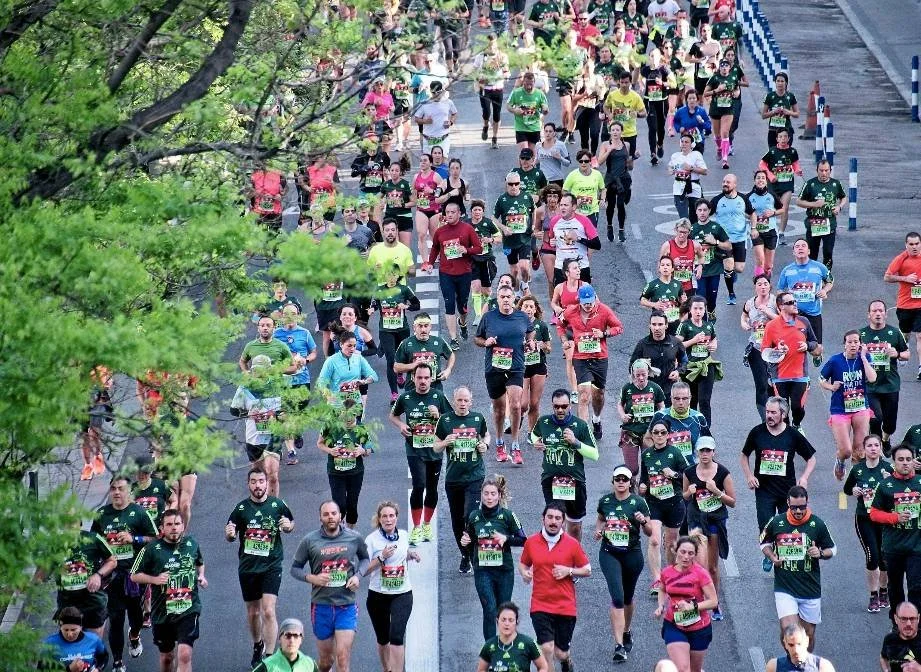
What Makes the Half Marathon a Different Training Challenge?
The half marathon places a significant demand on your ability to sustain your running over a prolonged period. An effort that feels controlled during the opening kilometres can become progressively more difficult to maintain as the distance unfolds and fatigue develops. This means preparing for 21.1 kilometres involves more than developing the speed you want to run at. Your ability to continue running effectively after spending a substantial amount of time at a demanding effort also becomes an important part of preparing for the distance.
This gives half marathon training a distinct focus. You are preparing for an event where maintaining performance matters across the full distance, so your training needs to support what happens as that prolonged effort continues. Different running intensities can contribute to this in different ways, allowing you to develop the qualities that support sustained running without expecting every session to reproduce the full demands of the half marathon itself.
Is Half Marathon Intensity the Same for Every Runner?
The intensity you can sustain throughout a half marathon will be individual. Finishing times can vary considerably between runners, meaning the physiological demand associated with completing 13.1 miles will not be identical for everyone. Rather than placing half marathon effort within one fixed training zone, it is more useful to consider the intensity you can maintain across the full distance and how demanding that effort is for you.
Your sustainable intensity can also change as your fitness develops. Improvements in the intensity you can maintain for prolonged periods can allow you to run faster without requiring the same relative effort. Training across different zones provides several ways to support this development, from running comfortably for longer periods to challenging intensities that sit above what you could sustain throughout an entire half marathon.
What Can Running Zones Tell You About Your Training?
Running zones divide your training into different intensity ranges, giving you a practical way to understand how hard a run is intended to be. You can establish these ranges using measures such as maximum heart rate (Max HR), lactate threshold heart rate (LTHR) and threshold running pace (TPace), while Rate of Perceived Exertion (RPE) can help you judge how the intensity actually feels. Each provides a different way of understanding effort rather than relying entirely on pace.
During half marathon training, these measures can help you keep the intended intensity of a session in context as the duration increases. Heart rate may change as a run progresses, while pace can be affected by the conditions or terrain you are running on. Combining these measures with RPE gives you more information to judge whether the effort remains appropriate for the purpose of your run. If you want to establish your own running zones, use the FLJUGA Running Zone Calculators to find the intensities you can use throughout your half marathon preparation.
When Can Zone 1 Be Useful During Half Marathon Training?
RPE 1–2 | Max HR 68–73%
LTHR 72–81% | TPace <78%
Zone 1 provides the easiest intensity within your half marathon training and can be useful when the purpose of a run is to keep the overall demand low. The effort should feel very easy, with relaxed breathing and conversation remaining comfortable. This gives you an option for running on days when adding another substantial training demand may not be necessary.
As half marathon preparation develops, longer runs and more demanding sessions can leave fatigue carrying into the days that follow. Zone 1 can provide space between these sessions while still allowing you to run, particularly when lower intensity is the main priority. Its role will depend on how your wider training is organised, but when you choose to include Zone 1, keeping the intensity genuinely easy is what allows it to serve that purpose.
Explore The Role of Recovery Running in Half Marathon Training for a deeper look at how very easy running can fit within your preparation for the distance.
Why Can Zone 2 Be Important for Half Marathon Runners?
RPE 3–4 | Max HR 73–80%
LTHR 81–90% | TPace 78–88%
Zone 2 provides an intensity where you can spend longer periods running while keeping the effort comfortable and controlled. Your breathing should remain steady and conversation should still be possible without much difficulty. For half marathon runners, this creates a useful intensity for accumulating time on your feet and developing the aerobic base that supports prolonged running.
Longer Zone 2 runs can gradually increase the amount of time you spend running without requiring the intensity to become progressively harder. This gives you a way to prepare for the extended duration of half marathon running while keeping the purpose of the session focused on comfortable aerobic work. As these runs develop, the duration itself can provide much of the challenge while the intensity remains controlled.
Explore Where Does Zone 2 Fit Into Your Half Marathon Training? for a closer look at the role of easy running when preparing for the distance.
How Can Zone 3 Develop Your Half Marathon Running?
RPE 5–6 | Max HR 80–87%
LTHR 90–95% | TPace 88–95%
Zone 3 introduces a moderately hard intensity that can be sustained for longer periods, making it particularly relevant to half marathon preparation. Running should feel purposeful but controlled, with breathing becoming deeper and conversation beginning to break into shorter phrases. The effort remains below your second lactate threshold, allowing you to accumulate meaningful periods of tempo running while keeping the intensity controlled.
For half marathon runners, Zone 3 can provide a way to develop your ability to maintain a stronger aerobic effort for extended periods. Tempo running can be completed continuously or divided into longer intervals, depending on the purpose of the session and your current training. This allows you to build experience maintaining a controlled intensity as fatigue develops, supporting the sustained nature of half marathon running without requiring the effort to become maximal.
Explore Building Half Marathon Endurance With Tempo Running to understand how Zone 3 can contribute to your preparation for the distance.
What Can Zone 4 Add to Half Marathon Training?
RPE 7–8 | Max HR 87–93%
LTHR 95–102% | TPace 95–103%
Zone 4 moves the intensity towards and around your second lactate threshold, creating a demanding form of running where maintaining the effort becomes progressively more challenging. Breathing becomes heavy and conversation is usually reduced to a few words at a time. Rather than trying to sustain this intensity for the duration of a half marathon, training around threshold allows you to challenge your ability to maintain a high aerobic demand in controlled periods.
For half marathon runners, developing this area can increase the intensity you are capable of sustaining before the demands associated with crossing your second lactate threshold begin to rise more rapidly. Improving this upper end can also support performance at the lower intensities you can sustain for longer, giving you a greater range of aerobic performance to work with. Threshold sessions can use intervals to accumulate time at this intensity while providing recovery between efforts, allowing the quality of the running to remain controlled.
Read Half Marathon Threshold Training Benefits for Runners for a deeper look at how Zone 4 can support your preparation for the distance.
Does Zone 5 Have a Place in Half Marathon Training?
RPE 9–10 | Max HR 93–100%
LTHR 102–106% | TPace 103–111%
Zone 5 sits at the highest intensity within the five-zone model and places a substantial demand on your aerobic capacity. Running at this intensity challenges your ability to deliver and use oxygen, providing a strong stimulus for developing VO2 max. The effort should feel very hard, with breathing becoming deep and rapid and speaking generally limited to individual words.
Although Zone 5 is considerably harder than the intensity you would typically sustain throughout a half marathon, developing your aerobic capacity can still contribute to performance at the lower intensities used across the distance. A higher upper limit gives you more aerobic capacity to work beneath, while Zone 5 training can also expose you to running at speeds above those used during longer sustained efforts. Its role within half marathon preparation is therefore not to reproduce the demands of the race, but to develop qualities that can contribute to your performance across the wider intensity range.
Learn How VO2 Training Develops Half Marathon Performance for a deeper look at how Zone 5 can contribute to your preparation for the distance.
Why Doesn't Half Marathon Training Need to Look Like the Race?
Preparing for a half marathon does not mean every session needs to resemble the effort you expect to sustain on race day. Training gives you the opportunity to separate the demands of the distance and work on them through different types of running. An easy run can serve a very different purpose from tempo or threshold work, while still contributing to your overall preparation for 13.1 miles.
This allows individual sessions to remain focused rather than trying to develop everything at once. Some runs can extend the amount of time you spend running comfortably, while others can introduce greater intensity for shorter periods. Across your training plan, these different sessions can complement one another and contribute to your ability to maintain performance across the full distance. See how different intensities can be applied in practice with 10 Example Half Marathon Training Sessions.
How Can Fatigue Change the Demands of a Half Marathon Run?
Fatigue can change how a particular running intensity feels even when your pace remains relatively consistent. As a longer run progresses, maintaining the same output may begin to require greater effort. Your heart rate may rise and the run can gradually feel more demanding despite little change in speed. This is particularly relevant to half marathon preparation because the challenge is not simply reaching a particular intensity, but continuing to manage your running after you have already spent a considerable amount of time on your feet.
Training can give you opportunities to experience this changing demand without needing every session to become harder. Longer runs can expose you to maintaining an effort as fatigue develops, while more focused sessions can challenge your ability to continue running effectively after completing previous work. Learning how your effort changes during these sessions can help you understand the demands of prolonged running and how your body responds as fatigue accumulates.
Do Half Marathon Runners Use Zones Differently?
Running zones provide a framework for organising intensity, but that does not mean every half marathon runner needs to use them in exactly the same way. Your current training background can influence which areas need greater attention, while the structure of your plan will determine where different intensities fit. Someone developing their ability to run for longer may therefore use the zones differently from a runner who is already comfortable with the duration of the distance.
The way you use the zones can also develop alongside your training. Some plans may include more work at particular intensities, while others organise the demands of half marathon preparation differently. There is no requirement for each zone to receive an equal amount of training. What matters is that the intensities you use have a clear role within the approach you are following and contribute to the preparation you need for the distance.
Should Your Running Zones Change as You Get Fitter?
Your running zones are not necessarily fixed throughout your half marathon preparation. As your fitness develops, the values used to establish your zones can change. For example, you may be able to run at a faster pace while working at the same relative intensity, meaning pace-based zones established earlier in your training may no longer represent your current ability as accurately.
This is why it can be useful to reassess the values your zones are based on as your training progresses. Changes do not need to be made simply because individual runs become faster or feel easier, but meaningful improvements in the measures used to establish your zones may justify updating them. Keeping your zones relevant to your current fitness allows them to remain useful as you continue preparing for your half marathon.
Common Mistakes When Using Running Zones for Half Marathon Training
One mistake is assuming that longer runs need to become progressively harder to provide a useful training stimulus. As the duration increases, maintaining the intended intensity can create enough demand without deliberately increasing the pace. What begins as a comfortable Zone 2 run can gradually develop into a harder challenge simply because you have been running for longer. Allowing an easy or controlled run to drift into a higher zone can change the purpose of the session and add more training stress than you originally intended.
Another mistake is treating your zones as exact boundaries that must be followed regardless of how the run develops. Heart rate can change during prolonged exercise and pace can vary with the conditions, so a small movement outside a target range does not automatically mean the session has gone wrong. Running zones are most useful when they help guide the intended effort rather than becoming numbers you feel you have to follow at all costs.
FAQ
What Running Zone Should I Use for a Half Marathon?
There is no single running zone that applies to every half marathon runner. The intensity you can sustain across the distance will depend partly on your individual ability and how long you take to complete 13.1 miles. Training zones are therefore more useful for organising your preparation than assigning one universal intensity to the event.
Why Use Running Zones for Half Marathon Training?
Running zones can help you separate the different intensities used throughout your half marathon preparation. This gives individual sessions a clearer purpose and provides a practical way to judge whether the effort you are maintaining reflects what the run is intended to achieve.
Does Heart Rate Change During Longer Training Runs?
Yes. Heart rate can gradually increase during prolonged running even when your pace remains relatively stable. Heat and hydration can influence this response, so heart rate should be considered alongside how the effort feels rather than assuming every increase represents the same change in training intensity.
Do I Need to Recalculate My Running Zones as I Get Fitter?
Not after every improvement, but the values used to establish your zones can change as your fitness develops. If your maximum heart rate, lactate threshold heart rate or threshold running pace is reassessed, updating your zones can help ensure they continue to reflect your current fitness.
Final Thoughts
Half marathon training gives you the opportunity to develop your running across a wide range of intensities while keeping the demands of 13.1 miles in perspective. Running zones can help give those different efforts a place within your preparation, but their value comes from understanding what each session is intended to contribute rather than simply trying to stay within a set of numbers.
As your preparation develops, the way you use those zones can develop with it. Learning how different intensities feel and how your effort changes during longer runs can give you a better understanding of your own running. The aim is not to make every session resemble the half marathon itself, but to arrive at the distance better prepared for the sustained effort it requires.
Always consult with a medical professional or certified coach before beginning any new training program. The information provided is for educational purposes only and is not a substitute for personalized advice.