
Fear of Judgement in Endurance Training and Competition
Summary:
Fear of judgement is a quiet pressure that follows many athletes through endurance training and competition. It shapes how openly effort is expressed, how decisions are made under fatigue and how safe it feels to fully commit in visible moments. Because it often goes unspoken, this fear can subtly narrow experience and influence behaviour even in dedicated athletes. This piece explores where fear of judgement comes from, how it operates in training and racing and how understanding it allows confidence, authenticity and steadiness to return.
When Awareness Turns Inward
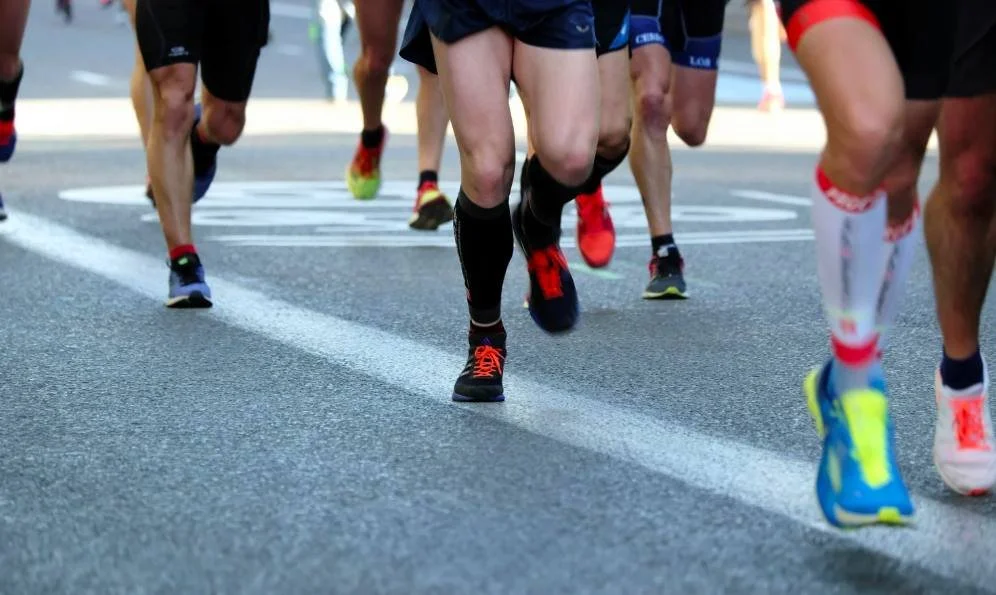
At some point, many endurance athletes become acutely aware of being seen. It might happen on a busy track, in a race pack or during a session that does not feel strong. The body is still moving and the work is still unfolding, but attention begins to drift outward. Thoughts turn toward appearance and comparison. How do I look? Am I falling behind? What are they thinking?
This inward turn is subtle but powerful. Effort becomes self-monitored instead of embodied and attention shifts away from sensation toward perception. Training starts to feel exposed rather than exploratory. The fear is rarely about performance alone. It is about how that performance might be interpreted by others and what those interpretations might mean for belonging, competence or self-worth.
This may help you reflect: Comparison in Endurance Sport: How to Stay Confident
Why Judgement Feels So Threatening
Being seen and evaluated has always mattered to people. In endurance sport, where effort is visible and comparison is constant, that awareness can quietly intensify. Bodies move side by side, performance unfolds in public and moments of strain are easily noticed. This makes sensitivity to judgement easy to trigger, even in athletes who are otherwise confident and committed.
Judgement feels threatening because it carries imagined consequence. Loss of credibility, embarrassment or the confirmation of long-held self-doubt. Even when no one is actively watching or evaluating, the mind fills in the gaps. The pressure rarely comes from others themselves. It comes from the meaning athletes attach to how they might be perceived and what those perceptions could imply about identity, competence or belonging.
This may help you steady: How to Manage Pressure and Expectation in Endurance Training
What Fear of Judgement Is Really About
Fear of judgement is rarely about strangers or isolated moments. More often, it is tied to identity. It surfaces when effort feels connected to how an athlete understands themselves and how they hope to be seen. At its core, this fear asks whether performance will align with the version of self an athlete is trying to live into.
What this fear often reflects
Desire for belonging:
Athletes want to feel legitimate, competent and accepted within their training environment or competitive community. Fear appears when there is a sense that belonging could be questioned, especially in visible moments where effort, struggle or limitation might be noticed.Attachment to image:
Fear grows when self-worth becomes linked to how performance appears outwardly. Attention shifts toward managing impressions and effort begins to feel performative. The experience of training becomes shaped by how it might look, not how it is actually felt from the inside.Past experiences:
Memories of criticism, comparison or exclusion can quietly resurface under pressure. Even long after the original experience has passed, similar situations can activate the same sensitivity. Fear reflects the mind’s attempt to avoid repeating what once felt exposing or painful.Uncertainty about ability:
When confidence wavers, judgement feels heavier. Doubt creates openness to imagined evaluation and effort feels riskier because outcomes seem less predictable. Fear intensifies when athletes are unsure how their performance will stand up to scrutiny.
Seen this way, fear of judgement signals care and investment, not fragility. It reflects how much the athlete values their place, their effort and their sense of self within the sport.
This may help you stay grounded: Endurance Mindset: How Your Story Shapes Performance
How Fear of Judgement Shapes Behaviour
When fear of judgement is present, behaviour often shifts in quiet, protective ways. Athletes may avoid group sessions, hesitate to express full effort, push beyond their limits to prove capability or withdraw emotionally when training does not feel strong. These adjustments are rarely conscious decisions. They emerge as subtle attempts to stay safe in situations where effort feels visible and exposed.
These responses are not flaws or signs of weakness. They are strategies for managing perceived risk and preserving a sense of control. The cost is that training becomes constrained over time. Effort is filtered through concern about appearance and engagement becomes cautious or performative. When energy is spent managing how effort looks, there is less space for learning, adaptation and genuine development to unfold.
This may help you reflect: How Social Media Pressure Affects Endurance Athletes
Fear of Judgement During Competition
Competition intensifies visibility. Numbers, positions and decisions unfold in public and effort is no longer private. Fear of judgement often peaks before races or during moments of struggle, when uncertainty is highest and outcomes feel most exposed. Attention shifts away from sensation and strategy toward how performance might be perceived, both by others and by the athlete themselves.
Under this pressure, behaviour often polarises. Some athletes race conservatively to avoid blowing up or drawing attention to weakness. Others push recklessly in an attempt to prove capability or silence doubt, a pattern that frequently leads to burnout and missed targets. Neither response reflects true capacity. They reflect the weight of being seen. When fear of judgement dominates attention, racing becomes a performance of identity rather than an expression of fitness, narrowing what the athlete is actually able to access in the moment.
This may help you steady: Racing with Emotion: How to Turn Feelings into Focus
What Happens When Judgement Is Internalised
Over time, external judgement can become internal. Athletes begin to anticipate criticism even when none is present. Self-talk starts to echo imagined reactions, comparisons or expectations and training becomes monitored from within. Effort is no longer simply experienced. It is evaluated in real time, measured against an internal audience that never fully switches off.
This internalisation is quietly exhausting. It keeps athletes hyper-aware, guarded and tense, even during familiar sessions. Energy is spent managing perception rather than inhabiting effort. The irony is that fear of judgement often creates the very strain it is trying to prevent. Training begins to feel tight and disconnected, not because capacity is lacking, but because attention is divided between effort and self-surveillance.
This may support you: How Self-Talk Shapes Endurance Performance and Mindset
How Understanding Judgement Changes the Experience
Understanding fear of judgement does not require ignoring others or pretending visibility does not exist. It requires recognising where authority has been placed. When athletes notice that judgement lives largely in interpretation and anticipation, not constant external evaluation, space begins to open. Attention loosens and effort is no longer organised around being watched.
What understanding allows
Return to embodied effort:
Attention gradually shifts back toward breath, rhythm and physical sensation. Athletes become more present inside the work itself, allowing effort to unfold without constant reference to how it might appear from the outside.Reduced self-monitoring:
Training becomes something lived instead of continually assessed. The internal commentary softens and effort is no longer tracked through imagined perception. This creates room for immersion and flow to return.Clearer choices:
Decisions begin to reflect capacity, context and intention. Pace, restraint and risk are chosen with awareness, not shaped by concern about appearance or comparison. Effort feels more honest and less negotiated.Stable confidence:
Self-trust grows as effort is no longer performed for approval. Confidence becomes quieter and more reliable, grounded in experience rather than reinforced through external validation.
Judgement loses its power when it is understood and located clearly. Once it is no longer treated as an external force that must be managed, athletes are free to train and compete with greater presence, steadiness and authenticity.
This may help you stay grounded: Your Inner Coach vs Inner Critic: How to Take Control
When Exposure Becomes Liberating
There are moments when athletes choose to show up despite fear of judgement. A slow day in public, a return after injury or a race that does not go to plan. In these moments, effort feels visible and exposed and the urge to protect or withdraw can be strong. Staying present through that exposure often feels uncomfortable, but it is also deeply honest.
Over time, these moments build resilience in quiet ways. Each time an athlete remains engaged without collapsing or retreating, the mind learns that judgement is survivable. Fear begins to lose its grip, not through force, but through experience. Training becomes less guarded, less performative and more open. Effort becomes more honest, guided by capacity and intention instead of performance for appearance.
This may help you reflect: How Letting Go Builds Mental Strength in Endurance Sport
Fear of Judgement in Daily Training
Fear of judgement does not only surface in obvious or dramatic moments. More often, it influences small, everyday decisions that appear practical on the surface but are shaped by concern about how effort might be perceived. These choices rarely feel emotional. They feel reasonable. Over time, however, they quietly shape how freely athletes are able to engage with training.
Where athletes begin to notice it
Choosing where and when to train:
Decisions about routes, times and environments begin to centre on visibility. Athletes gravitate toward quieter spaces, less crowded sessions or familiar settings where exposure feels limited. This choice can feel sensible and protective, yet it is often guided by a desire to avoid being seen struggling or performing inconsistently, even when more visible environments would otherwise support growth and connection.Managing effort expression:
Athletes become aware of how effort looks from the outside. Visible struggle is softened or concealed, while ease may be exaggerated. Breathing is controlled, posture adjusted and pace subtly altered to appear composed. Attention shifts away from internal sensation and toward outward presentation, creating distance between the athlete and their actual experience of effort.Responding to inconsistency:
On days when performance fluctuates, fear influences how athletes stay engaged. Sessions may be shortened, intensity reduced prematurely or effort withdrawn mentally. This response protects against exposure, but it also interrupts learning. Inconsistency becomes something to hide instead of something to work through.Interpreting feedback:
Comments, glances or neutral observations are quickly filtered through assumed judgement. Meaning is added before clarity has time to emerge. Confidence and response shift based on interpretation rather than intent, shaping how athletes relate to others and to their own performance in subtle but persistent ways.Deciding when to commit fully:
Athletes delay full engagement until they feel confident they can be seen succeeding. Risk is postponed and ambition is held back until conditions feel safer. This hesitation is not caused by lack of capacity, but by the sense that exposure carries consequence. Commitment becomes conditional on perceived readiness to be evaluated.
These patterns narrow experience quietly and gradually. When they are noticed with awareness, they begin to loosen on their own. Training opens back up as athletes reclaim choice, allowing effort to be guided by intention instead of concern about how it appears.
This may help you: Endurance Mindset: How Your Story Shapes Performance
Letting Effort Belong to You Again
Endurance sport asks athletes to place effort in visible spaces. When fear of judgement governs that effort, attention is divided between performance and protection. Understanding judgement changes this relationship. Effort begins to feel owned again, guided by intention and sensation rather than anticipation of evaluation. Training becomes a place to meet the work honestly, not manage perception.
Over time, this shift reshapes identity within the sport. Athletes no longer need to prove legitimacy through appearance or comparison. Confidence grows from participation and responsiveness, not approval. Fear of judgement may still arise, but it no longer defines how effort is expressed. In endurance training and competition, this return to ownership is what allows authenticity, steadiness and long-term engagement to take root.
This may support you: How to Start Endurance Training Again with Confidence
FAQ: Fear of Judgement in Endurance Sport
Why do I worry about being judged during training?
Because effort is visible and identity is often tied to performance.
Does fear of judgement mean I lack confidence?
No, it usually reflects care and sensitivity rather than weakness.
Why is fear of judgement stronger in groups or races?
Because visibility and comparison are heightened in those settings.
Can fear of judgement affect performance?
Yes, it can shape pacing and decisions when it dominates attention.
Does understanding judgement reduce its impact?
Yes, awareness creates space and restores focus.
Will fear of judgement ever disappear completely?
It usually softens over time as self-trust strengthens.
FURTHER READING: Understanding Judgement
Fljuga Mind: Fear of the Unknown in Long Term Endurance Training
Fljuga Mind: Fear of Loss and Setbacks in Long Term Endurance Training
Fljuga Mind: Fear of Discomfort and Avoidance in Long Term Training
Fljuga Mind: Fear of Being Seen in Training and Competition Environments
Fljuga Mind: Training Avoidance and the Fear of Experiencing Discomfort
Fljuga Mind: Choosing Exposure Over Escape in Endurance Training
Fljuga Mind: Effort vs Outcome and How Athletes Measure Progress
Fljuga Mind: Attachment to Outcomes and the Fear of Falling Short
Fljuga Mind: Perfectionism and the Emotional Cost of High Standards
Final Thoughts
Fear of judgement in endurance training and competition is not a sign of insecurity. It is a sign that effort matters and identity is involved. When athletes understand this fear instead of trying to suppress it, they reclaim agency. Training becomes less about managing how effort is perceived and more about staying present with the work itself. Judgement may still exist, but it no longer dictates direction. What remains is authenticity, steadiness and a deeper relationship with effort.
The information on Fljuga is for educational purposes only and is not a substitute for medical, psychological, or professional advice. Always consult with a qualified medical provider, mental health professional, or certified coach.
